.png)


Is Your Fleet Ready? The Ultimate Commercial Auto Insurance Checklist

Running a business with company vehicles? Whether you've got two delivery vans or twenty service trucks, commercial auto insurance isn't optional: it's essential. And if you're thinking your personal auto policy will cover that work truck, think again.
Here's the thing: Most business owners know they need commercial auto coverage, but figuring out exactly what you need? That's where it gets tricky.
This checklist breaks down everything you need to know to properly protect your fleet, keep your drivers safe, and avoid nasty surprises down the road.
Start With Your Fleet Assessment
Before you even talk to an insurance agent, you need a clear picture of what you're working with.
Count your vehicles. You'll typically need at least two business vehicles to qualify for fleet insurance. Some carriers want five or more. If you're running solo with one truck, you'll likely need a standard commercial auto policy instead.
Document everything. Make a list that includes:
Year, make, and model of each vehicle
VIN numbers
Current mileage
Primary use (delivery, service calls, equipment hauling)
Where vehicles are stored overnight
Know your vehicle mix. The great news? You can usually insure different types of vehicles under one fleet policy. Sedans, pickup trucks, cargo vans, box trucks: even specialty vehicles like tow trucks or snow plows can be grouped together.

Track vehicle usage. How your vehicles are used matters: a lot. A van making local deliveries carries different risk than a truck hauling equipment across state lines. Be specific about how many miles each vehicle logs annually and what routes they typically travel.
Coverage Essentials: The Non-Negotiables
Let's talk about what you absolutely must have.
Liability coverage is mandatory. Every state except New Hampshire requires it for business vehicles. This covers bodily injury and property damage your vehicles cause to others. In Massachusetts, you're looking at minimum requirements of $20,000 per person and $40,000 per accident for bodily injury, plus $5,000 for property damage.
But here's the reality: Those minimums aren't enough. One serious accident can easily exceed those limits, leaving your business on the hook for the rest.
Check your state's specific requirements. If you operate in multiple New England states, make sure you meet the highest requirements. Maine and other states have varying minimums, and your policy needs to cover you everywhere you drive.
Understand per-occurrence vs. aggregate limits. Your policy will have both. The per-occurrence limit is the maximum your insurer pays for a single accident. The aggregate limit is the total they'll pay for all claims during your policy period.
Additional Coverage Worth Considering
Basic liability keeps you legal. These coverages keep you protected.
Collision coverage repairs or replaces your vehicles after accidents: regardless of who's at fault. If your fleet is your business lifeline, you can't afford to have vehicles sitting in a body shop while you scramble to pay for repairs out of pocket.
Comprehensive coverage handles the stuff that has nothing to do with driving. Theft, vandalism, fire, hail damage, hitting a deer: it's all covered. In New England, where winter weather can wreak havoc, this protection is especially valuable.

Uninsured/Underinsured Motorist coverage protects you when the other driver doesn't have adequate insurance. Unfortunately, this happens more often than you'd think.
Medical Payments coverage takes care of medical expenses for your drivers and passengers after an accident, regardless of fault. It kicks in fast, covering immediate medical costs while liability questions get sorted out.
Hired and Non-Owned Auto Insurance (HNOA) is critical if employees ever use personal vehicles for business errands or if you rent vehicles. Your standard policy won't cover these situations.
Cargo and Equipment insurance protects what you're hauling and any tools or equipment mounted in your vehicles. If you're a contractor with thousands of dollars in tools, this coverage is a must.
Your Drivers Matter More Than You Think
Your insurance costs and coverage depend heavily on who's behind the wheel.
List all authorized drivers. Fleet insurance automatically covers all designated employees without listing each person individually, which simplifies things as your team grows.
Verify everyone's properly licensed. Sounds obvious, but verify that all drivers have valid, appropriate licenses for the vehicles they're operating.
Review driving records. Your insurer will definitely look at this. Drivers with clean records mean lower premiums. Multiple violations or accidents? Expect to pay more.
Document safety training. Put your drivers through safety courses. Many insurers offer discounts for completed training programs, and it shows you take risk management seriously.
Set clear vehicle use policies. Put it in writing: who can drive company vehicles, when, and under what circumstances. Personal use policies should be crystal clear.

Smart Ways to Lower Your Premiums
Commercial auto insurance isn't cheap, but these strategies can help control costs.
Pay annually. If cash flow allows, paying your premium in full up front typically costs less than monthly installments.
Install GPS tracking systems. These devices help you monitor driving behavior, optimize routes, and even recover stolen vehicles. Many insurers reward this proactive approach with lower rates.
Invest in driver safety training. This isn't just about discounts: better-trained drivers mean fewer accidents and claims, which translates to lower premiums over time.
Maintain spotless driving records. Every ticket and accident impacts your rates. Make safe driving a core company value.
Implement a solid risk management plan. Show your insurer you're serious about safety. Regular vehicle maintenance, documented safety protocols, and driver accountability systems all demonstrate you're a lower-risk client.
Bundle policies. If you're insuring other aspects of your business with the same carrier, ask about multi-policy discounts.
Simplify Policy Administration
Managing commercial auto insurance doesn't have to be a paperwork nightmare.
Use one fleet policy instead of multiple individual policies. This consolidation means one renewal date, one payment, one point of contact. Much simpler.
Take advantage of easy vehicle changes. Fleet policies make adding or removing vehicles straightforward. As your business grows or shrinks, your insurance can adjust with minimal hassle.
Keep detailed records. Document everything: vehicle information, driver details, coverage specifics, claims history. You'll need this for renewals and if you ever switch carriers.
Set renewal reminders well in advance. Don't wait until the last minute. Review your coverage 60-90 days before renewal to ensure it still fits your needs.
Special Considerations for New England Businesses
If you're operating in Massachusetts, Rhode Island, or Connecticut, keep these regional factors in mind.
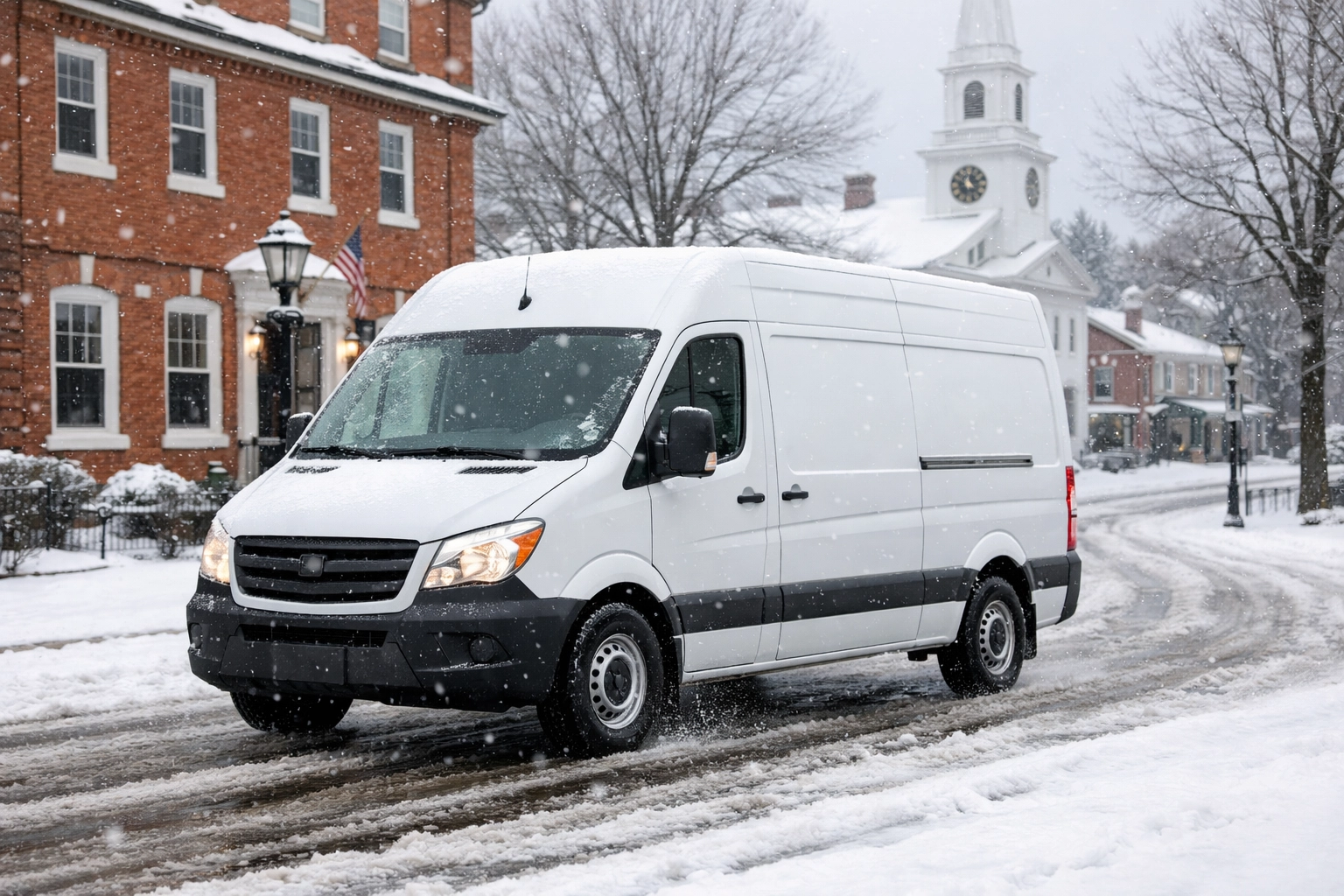
Winter weather impacts coverage. Heavy snow, ice storms, and coastal weather events are part of doing business here. Make sure your comprehensive coverage adequately protects against weather-related damage.
Cross-state operations are common. The good news: your policy travels with you. If your vehicles cross state lines regularly, you're covered in every state you enter.
Urban vs. rural considerations. Vehicles operating in Boston face different risks than those in rural Western Mass. Storage location, typical routes, and exposure to theft all factor into your rates.
If You're Leasing or Financing Vehicles
Borrowed money means extra requirements.
Collision and comprehensive coverage are usually mandatory. Your lender will require this to protect their investment, even though most states don't legally require it.
Verify coverage limits meet lender specifications. Check your financing agreement carefully. The lender's requirements might exceed your state's minimums.
Understand gap coverage. If you total a leased or financed vehicle, gap insurance covers the difference between what you owe and what the vehicle is worth. This can save you from owing thousands on a vehicle you can no longer use.
Ready to Protect Your Fleet?
Getting your commercial auto insurance right isn't just about checking boxes: it's about protecting the vehicles that keep your business moving forward.
Start with this checklist. Review your current coverage against these recommendations. And if you're unsure about anything, that's exactly what we're here for.
At G.Preto Insurance, we work with businesses throughout Massachusetts, Rhode Island, and Connecticut to build commercial auto coverage that actually fits how you operate. No cookie-cutter policies. No guesswork.
Want to make sure your fleet has the right protection? Reach out for a quote. We'll review your current coverage, identify any gaps, and build a policy that makes sense for your business and your budget.

Comments